What if the most valuable part of a business case study isn't the information on the page, but the information that's missing?
For decades, business case studies have been a cornerstone of management education, designed to simulate real-world decision-making by challenging students to analyze complex problems. But even the best-written case studies share one significant limitation: every piece of information a student needs is already neatly contained in a single, static document.
In the real world, leaders rarely receive a tidy packet of facts. They have to hunt for them, navigate conflicting stories, identify gaps in data, and decide who to trust. When students get the whole story upfront, they learn to analyze — but they may miss the chance to learn how to investigate.
At DePaul University's Driehaus College of Business, Associate Professor Joel Reynolds is experimenting with a different approach: replacing static case studies with interactive AI simulations that more closely resemble the complexity of real organizational decision-making.
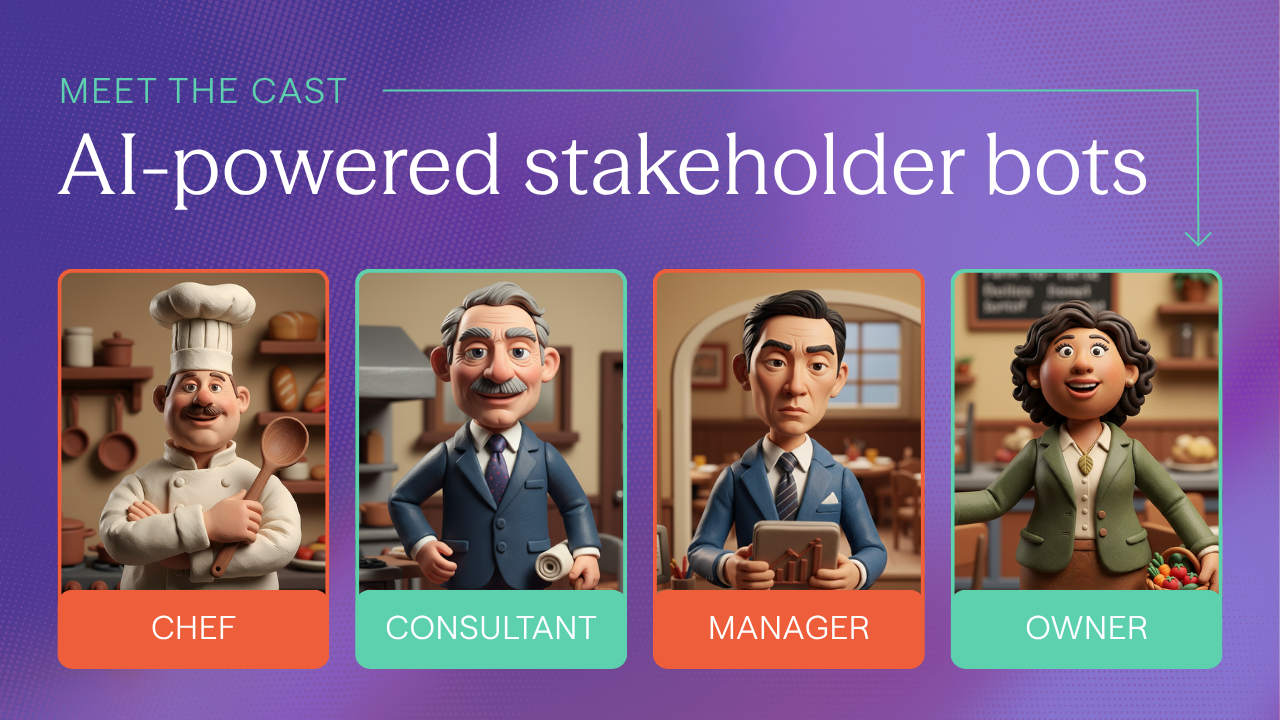
Using BoodleBox, Reynolds turned a traditional hospitality management assignment into an investigative experience. Rather than receiving a PDF outlining a restaurant's financial challenges, students enter a simulated organization populated by a cast of AI-powered stakeholders.
Each character represents a different perspective within the business, and each holds only part of the story. The shift is fundamental: students don't simply read about a business problem — they have to uncover it.
No single AI persona is an oracle; each character only knows what they would plausibly know in a real business. To get the full picture, students must interact with:
This setup changes the assignment into something closer to real consulting work. Because the bots simulate incomplete and sometimes reluctant sources, students are forced to develop professional judgment.
They have to figure out who would plausibly know a piece of information before they can even ask the question. They have to reconcile conflicting framings — the GM's read on a problem rarely matches the Owner's, and neither is wrong, they just have different perspectives. Students must decide when they've gathered enough evidence from enough angles to propose a strategy.
The "aha moment" happens when students realize there isn't a single correct answer waiting to be found. They are rewarded for their curiosity, their strategic questioning, and their ability to synthesize a messy reality into a coherent plan.
One of the most effective parts of this structure is that it happens outside of class time. Students can work through the simulation at their own pace, looping in classmates to discuss their findings in shared BoodleBox threads. This "flipped" approach means that when students arrive in the lecture hall, they aren't just starting to think about the case — they're ready to debate it.
The assignment also includes a critical reflection component. Alongside their final strategy memo, students submit an account of their interaction with the bots, writing about:
This reflection makes the learning process visible. It allows instructors to see not just the final output, but the strategic reasoning that produced it.
The dominant conversation in higher education has centered on managing AI — detecting it, limiting it, setting guardrails around it. What Reynolds has built at DePaul reorients that entirely: a simulation where the technology generates the productive struggle that makes learning deeper, messier, and ultimately more human.
That outcome doesn't happen by accident, but by design. Reynolds didn't inject AI into an existing assignment. He rebuilt the assignment around what AI makes possible.
Learn more about the ins and outs of the BoodleBox workspace from our team of experts.
Schedule a meetingLooking for more information?